BIOL 312, University of Massachusetts Amherst
Association of Unhealthy Levels of Sleep Duration (>7 Hours) with Blood Pressure Hypertension, Sleep Apnea, or Low Levels of Activity
Simran Kaur, Aadi Trivedi, Daniel Mardorf
Overview
Inadequate sleep is increasingly common and is linked to hypertension, obesity, and reduced cognitive performance, but it's less clear which lifestyle and health factors are most strongly associated with reduced sleep duration. This project examined data from 374 adults aged 27-59 in the "Health and Sleep Relation 2024" dataset, comparing blood pressure status, physical activity level, and sleep apnea status against sleep duration (healthy defined as at least 7 hours per night) to determine which factor showed the strongest relationship with sleep deprivation.
Abstract
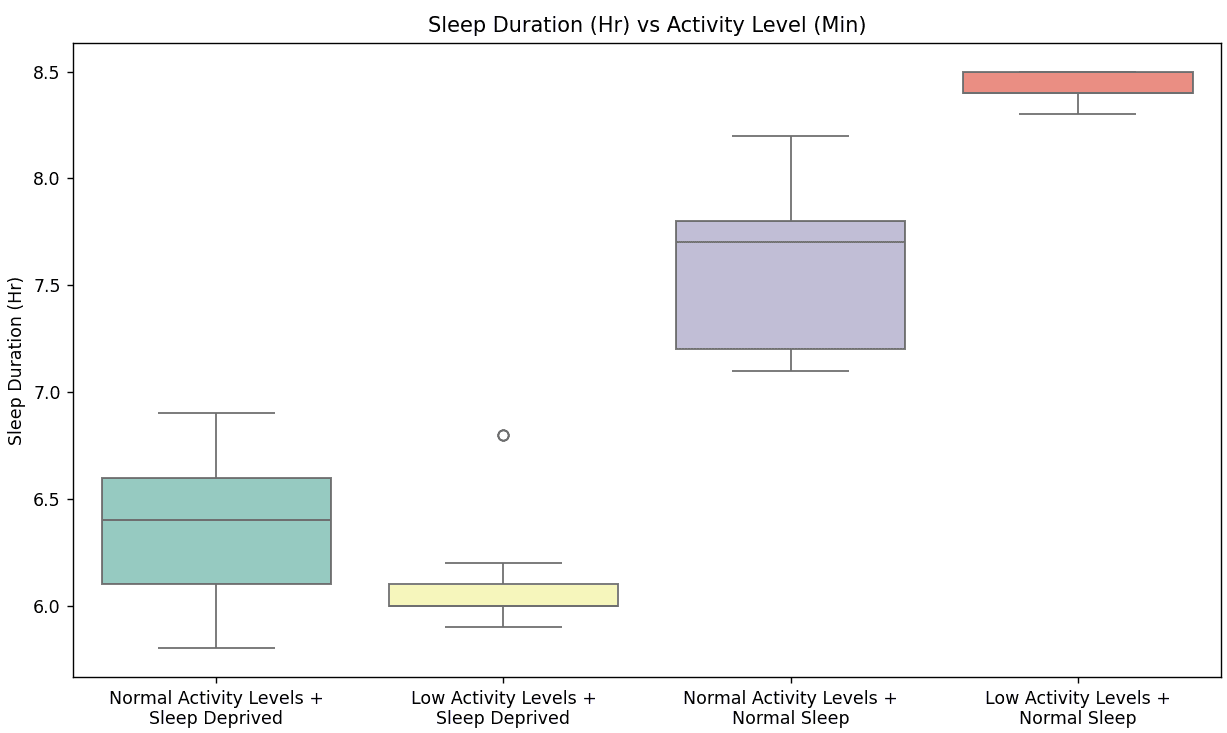
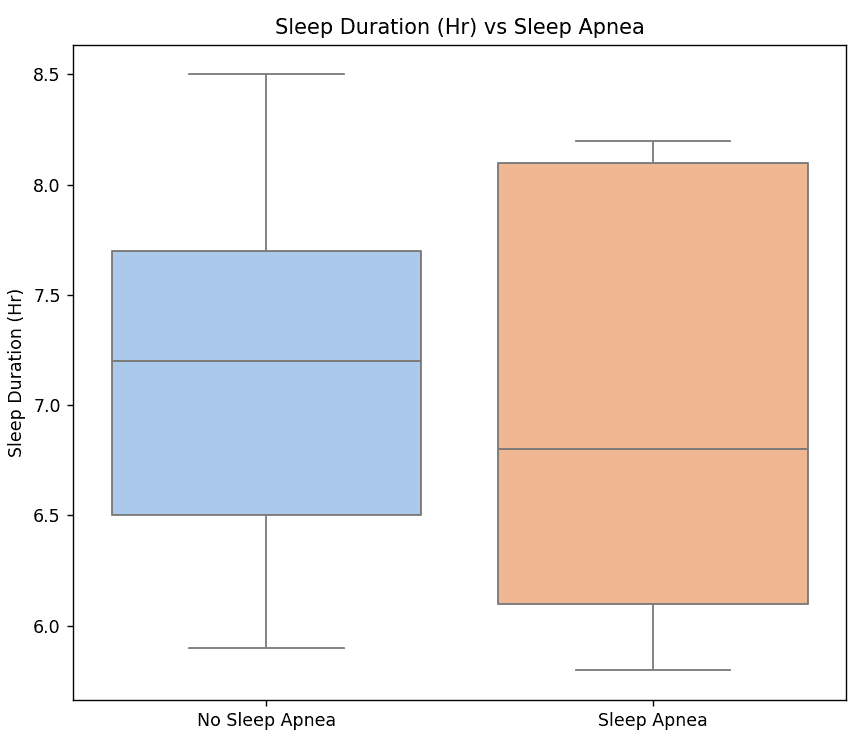
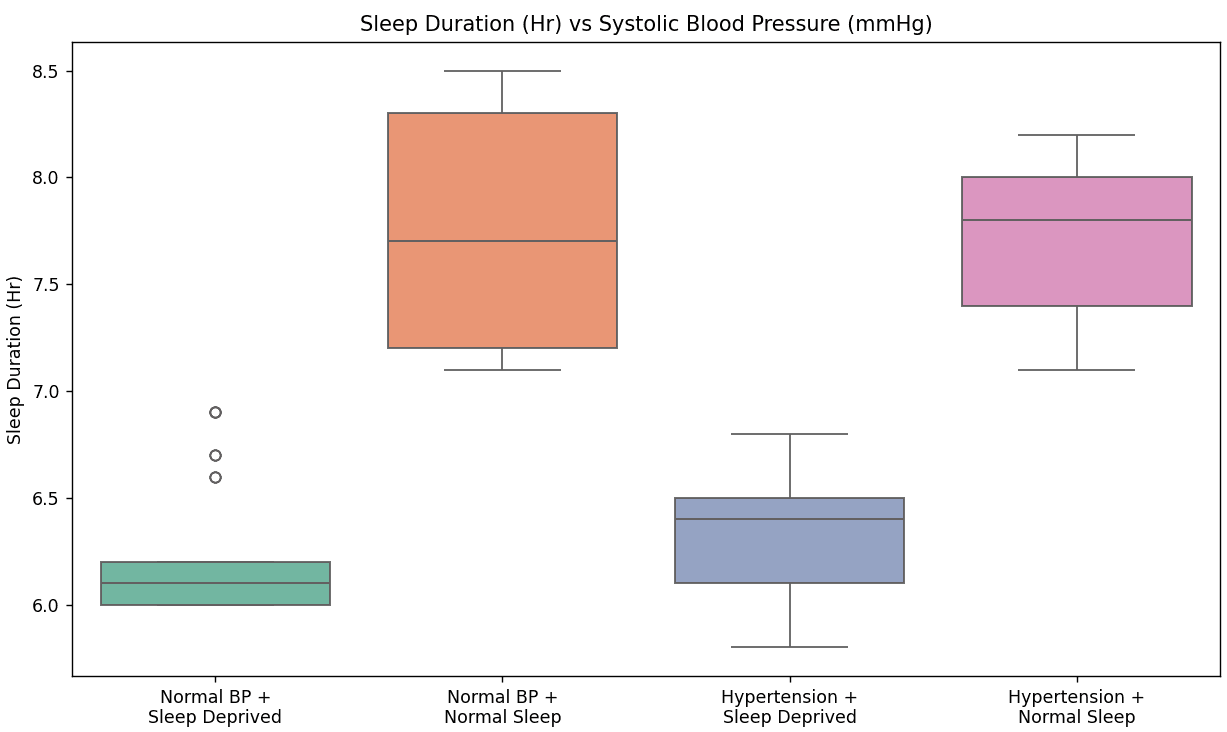
Modern lifestyles and health conditions have contributed to increasing rates of inadequate sleep. This leads researchers to become more motivated in understanding the factors that may negatively affect sleep duration. This study explores the relationship between sleep duration and three health conditions: hypertension, physical activity level, and sleep apnea. The data were collected from the "Health and Sleep Relation 2024" dataset and included 374 adults aged 27-59. Participants were organized by blood pressure, activity level, and sleep disorder status, and these factors were used to determine whether they were achieving a healthy amount of sleep, defined as at least 7 hours per night. The data were analyzed using the Kruskal-Wallis test because they did not follow a normal distribution. Statistical comparisons were performed to evaluate whether lifestyle factors were associated with unhealthy sleep duration. The p-value threshold of 0.05 was used to determine statistical significance. The goal of this study was to determine which variables showed the strongest relationship with reduced sleep duration, and the results can help improve understanding of how our lifestyle and health habits contribute to sleep-related health concerns in adults. Overall, 62.0% of participants achieved normal sleep, while 38.0% were classified as sleep-deprived. Participants with low physical activity levels (<30 minutes per day) were seen to not have significantly different sleep durations (p>0.05) than participants with high physical activity levels (>30 minutes per day), along with those who did or did not have sleep apnea. Participants with hypertension were confirmed to have significantly different sleep durations, with those having at least stage 1 hypertension (Systolic BP > 130 mmHg) having better sleep than those with a normal blood pressure. While studies primarily focus on how low sleep duration is associated with hypertension, few study the vice versa, and from this future studies can look into the specific associations of shorter sleeping durations from blood hypertension, or if certain degrees of hypertension could lead to lower sleep durations than others.
Figures